Author: admin

  • Unemployment Rates; The Good, The Bad, and The Ugly

    As American citizens it is important to know the state and welfare of our country’s economy. Part of grasping the concept of our economy is understanding the effects of unemployment on our citizens.

    Unemployment is a problem we and our ancestors have been dealing with for centuries. This is why the Great Depression is a necessary subject to be included when initiating a discussion surrounding this topic.

    The Great Depression, a devastating time in American history when the unemployment-rate reached approximately 25% from 1929 to 1933, was a time in history no one likes to remember. With nearly 1/4th of the American population unemployed, the economy was crumbling beneath our feet. Hungry children had their ribs outlined on their skin. Scared citizens faced bank failures causing them to scramble to get their money back into their pockets.

    Consequently, the citizens of the United States were becoming increasingly more miserable and hopeless. At this time, President Hoover was in office. He urged employers to avoid lay-offs and encouraged those with money to participate in volunteer work, believing the economy would self correct on its own. During Hoover’s Presidency, the Smoot-Hawley tariff act was signed into law, putting tariffs on imports to try and protect American farmers from outside competition. It is speculated that this put even more stress on the American economy by limiting international trade, thus potentially contributing to the skyrocketing unemployment rate.

    Following this historical recession was World War II in 1939. WWII brought the country out of its economic pit of despair and created jobs for both men and women to contribute to the war effort, giving the country its much needed economic growth.

    After the economic recovery post-WWII, the United States faced another significant recession in March of 2020. Lasting only a few short months, it still had an intense effect on our economy. With the unemployment rate at almost 15%, the economy was struggling, and it created fear for the future. Especially when it came to the homeless. As a result of this recession, many people were forced onto the street. For the first time in history there were more un-sheltered homeless on the streets than those actively being sheltered due to the quarantine. Shelters refused people seeking help because of the limited bed space from social distancing.

    Though, similarly to the Great Depression, America came out of its recession suddenly and started on a path toward economic growth and prosperity. However, this change was not due to any war efforts necessary for the nation’s survival. The recovery was largely due to the social shift towards working at home and the intense relief and recovery programs implemented at the time. Currently, we are experiencing economic health and growth, with the unemployment rate at 4.2%, indicating recovery from recent recessions.

    But this raises the question, “Can the unemployment rate be too low?”. The answer is highly debated, but in general the answer is yes. In a healthy economy there is always some sort of unemployment rate from people switching jobs, moving cities, being in-between contracts, or getting temporarily laid off. Therefore, meaning that a 0% unemployment rate implies an incredibly inflexible labor market and an inability for citizens to quit when their work situation becomes inadequate or if they want to move on to a better job.

    The remedy to this is to find the healthy medium, otherwise known as the “Natural Rate” of unemployment, which means the lowest unemployment rate that is reasonable within a healthy economy. Generally this is around 4%-6%. If the unemployment rate is below this that usually means the economy is overproducing and there is an influx of goods nobody wants or needs. These resources get thrown away and wasted, ending up in landfills and the polluting oceans and rivers.

    With this in mind, unemployment still fluctuates in ways that can often be hard to control. There are several reasons that an economy may fluctuate and change; there are four different types of unemployment help to simplify different factors that go into this. Such as frictional, structural, cyclical, and seasonal unemployment. Frictional unemployment is where workers move through the labor force due to short term circumstance. However, structural unemployment is when there is a mismatch between the worker and employer, like job location and skillset. Cyclical unemployment occurs when an economic slowdown leads to layoffs and reduced demand for workers. Seasonal unemployment is much more common, it usually means workers are only needed during certain times of the year. Such as tourist season or during the holidays.

      In conclusion, the job market will fluctuate up and down in a free market and is often hard to control or manipulate. Different factors go into what affects the job market and unemployment rate, often resulting in devastating lows followed soaring highs as shown by The Great Depression and Pandemic Recession. As Americans it is important we learn of our history and to look at how it may affect us in our futures. History always leaves its mark, especially on our economy.
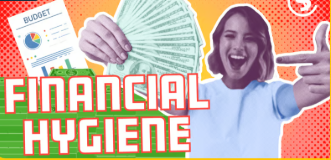

    1. Economic hygiene; The Easy Way

      Lesson Plan (45 mins.)
      Warm-Up: (10 mins.)

      1. Share surprising statistics about how Americans waste billions on unused gym
        memberships, overdraft fees, and identity theft.
      2. Invite students to share what they do as part of their morning routine, such as brushing
        their teeth, washing their face, eating breakfast, and getting dressed.
        Scan to watch episode:
      3. Ask students to think about and discuss the ramifications of skipping an essential
        morning task like brushing their teeth. Mention potential outcomes like cavities and
        tooth extractions.
      4. Conclude by explaining that just like daily personal hygiene routines are essential for our
        health, maintaining financial hygiene is crucial for our economic well-being. Mention that
        today’s lesson will cover important financial terms like budget, positive cash flow, and
        negative cash flow.
        Watch and Apply: (25 mins.)
      5. Watch the video, Ca$h Cour$e: Managing Your Financial Hygiene.
      6. Distribute the “Ca$h Cour$e: Managing Your Financial Hygiene Worksheet.” Allow
        students 10 minutes to complete the worksheet independently.
      7. After the worksheet activity, go through the questions as a class. Open the floor for
        questions and areas where students need further clarification.
        Wrap-Up: (10 mins.)
      8. Invite students to share any new insights they’ve gained about financial hygiene.
        Encourage them to elaborate on how these insights could help prevent negative financial
        outcomes.
      9. Prompt students to consider what habits they will cultivate for ongoing financial health.
        Record these habits on the board as students share them.
      10. Ask students what they can do to practice personal financial hygiene. List these on the
        board and have students discuss the consequences of neglecting or maintaining each
        action.
        Don’t have time for the full lesson? Quick Activity (10-15 mins.)
        Distribute the worksheet and allow students to complete it while they follow along with the
        video. Or, have students watch the video at home and use the worksheet as a quick quiz the
        next day in class.
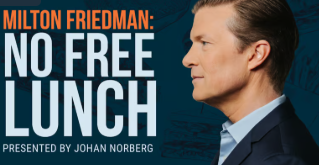
    2. Milton Friedman; No FREE Lunch

      “There is no such thing as a free lunch.”

      That’s basically all you need to know about economics—or for that matter, about life.

      Everything comes with a price and there are no perfect solutions, only trade-offs. 

      If you think you’re getting something for “free,” you’re fooling yourself. One way or another somebody has to pay for it—and that “somebody” usually includes you!

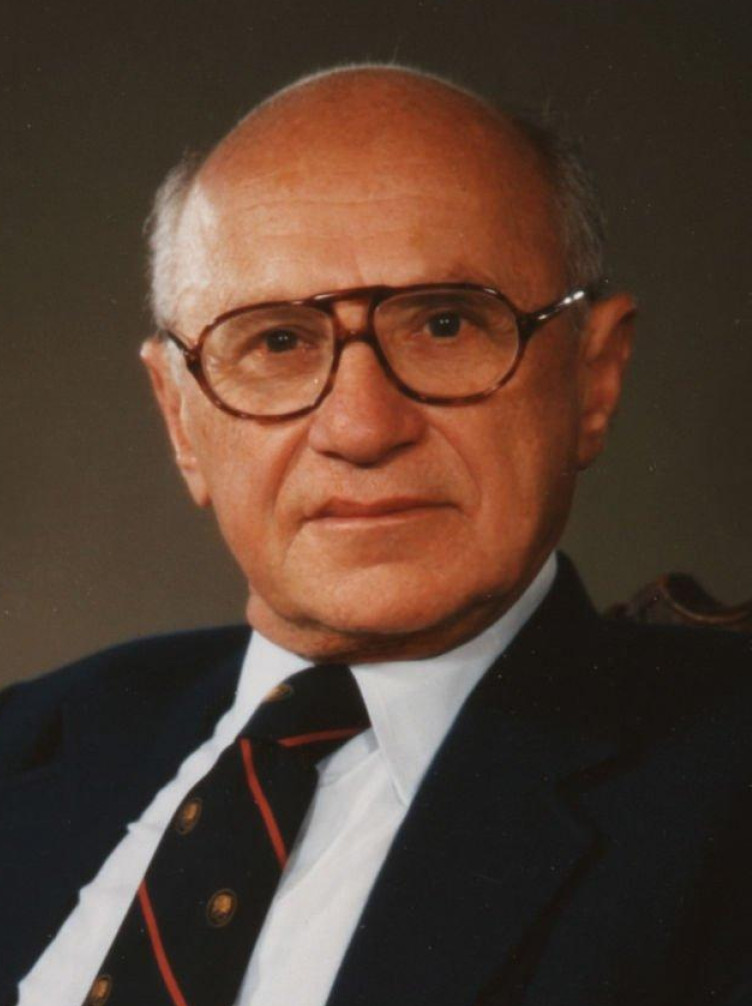
      This bit of priceless wisdom was popularized in the 1970s by University of Chicago economist, Milton Friedman. And it made him, along with his many other penetrating insights, the most influential economist of his time. 

      Born in Brooklyn in 1912, the son of two poor Jewish immigrants from what is now Ukraine, Friedman never took the opportunities America offered him for granted. He devoted his life to making the case for free enterprise. No one has ever made it more persuasively. 

      His scholarly work centered on monetary theory, the idea that the growth or contraction of the money supply has a profound impact on a nation’s economy. The Great Depression of the 1930s, which had caused so much suffering, and which Friedman had lived through personally, made his case. 

      Friedman showed that the Depression was not a failure of an out-of-control free market, but an out-of-control Federal Reserve—the Fed—the central bank of the United States.  

      Instead of keeping the money supply stable in a recession, the Fed choked it off. This started a series of “bank runs”—people literally running to get their money out of their bank before their bank ran out of money. 

      But that, according to Friedman, was not the Fed’s biggest mistake. The biggest mistake was that the Fed existed at all. No Fed, Friedman believed, no Great Depression. The free market would have figured things out on its own just as it had in previous economic upheavals. 

      But the Fed’s members had no confidence in the market. Their confidence was in their own ability to fine-tune America’s incredibly complex economy. 

      This confidence was misplaced. The Fed, and the President who dominated the decade, Franklin Roosevelt, made one bad decision after another, and the Depression dragged on. 

      Friedman saw another grave mistake being done in the early 1970s. He made the bold prediction that the Fed’s efforts to print money to keep the country out of a recession would lead to something worse: stagflation, the combination of high inflation and high unemployment. 

      And that’s exactly what happened. Many economists who had previously dismissed Friedman now acknowledged that he was right. In 1976, he received the Nobel Prize in Economics, yet another vindication of his work.

      But as perceptive as his economic theories were, his special gift was his ability to explain his theories to the public and his willingness, indeed eagerness, to do so. 

      He wrote best-selling books and had a column in Newsweek for 18 years. In 1980 he hosted the popular ten-part TV series Free to Choose for PBS. 

      The theme of the show was pure Friedman: while others trusted the government to make good decisions, Friedman trusted people and the market. 

      Excessive government control, regulation, and taxation, he persuasively argued, distorted incentives and put money in the hands of politicians and bureaucrats who had not earned it and suffered no consequences if their policies failed.

      There were other ways government intervention distorted the free market, Friedman said: protectionism, for example, increased prices for consumers and discouraged innovation; overregulation allowed big business with its lawyers and lobbyists to drive out small competitors; minimum wage laws led to fewer jobs for those who needed them most. 

      It all followed from Friedman’s basic idea that millions of people working for their own purposes could make better decisions than a bunch of unelected bureaucrats who had no stake in the outcome. 

      But Friedman didn’t just complain about the problem. He had solutions ready when and where they were needed.

      When communism collapsed in Eastern Europe in the late 1980s, economists in places like Estonia, Poland, and Czechia who had read Friedman in secret, sometimes by candlelight, now embraced his low tax, light regulation model to great effect.

      And when my own country, Sweden, faced a welfare state-induced crisis in the early 1990s, it was Friedman’s ideas that guided the Swedish reformers. They opened up markets, tightened social security benefits, and in 1992, Sweden implemented Friedman’s idea about a national school voucher system.

      Friedman’s influence spanned the globe. Israel, Chile, New Zealand, the UK, and of course, the United States put his ideas into practice. They worked.

      The Economist magazine appropriately (and cleverly) titled its obituary of the great economist in 2006, “How Milton Freed Man.”

      As his fame spread, Friedman always held fast to his guiding principle: that freedom is not the rule but the exception. “The typical state of mankind,” he wrote, “is tyranny, servitude, and misery.”

      So, the price of liberty is eternal vigilance—and knowing Milton Friedman.

      I’m Johan Norberg, Senior Fellow at the Cato Institute, for Prager University.

    3. Quiz

      My Multiple Choice Quiz

      dknofalnfa

      Click here and select a quiz from the block sidebar.

    4. Mustache Cat

      GSDDDDDDDDDDDDDDDDDDDDDDDDDDDDDDDDDDDDDDDDDDDDDDDDDDDDDDDDDDDDDDDDDDDDDDDDDDDDDDDDD

      GGGGGGGGGGGGGGGGGGGGGGGGGGGGGGGGGGGGGGGGGGGGGGGGGGGGGGGGGGGGGGGGGGGGGGGGGGGGGGGGGGGGGGGGGGGGGGGGGGGGGGGGGGGGGGGGGGGGGGGGGGGGGGGGGGGGGGGGGGGGGGGGGGGGGGGGGGGGGGGGGGGGGGGGGGGG

    5. PragerU

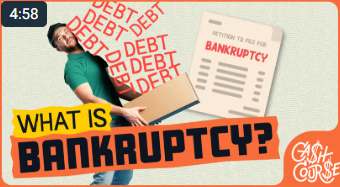
      What is Bankruptcy?

      • What Is Bankruptcy?
      • Why is understanding bankruptcy important for all individuals, regardless of their current financial status?
      • Students explore the concept of bankruptcy, including its types, processes, and implications for individuals and businesses.
      • Learning Objectives:
      • Identify the reasons people or businesses might declare bankruptcy.
      • Define key terms associated with bankruptcy.
      • Describe the different components of the bankruptcy process.
      • Differentiate between Chapter 7, Chapter 13, and Chapter 11 bankruptcies.
      • Apply knowledge to hypothetical financial scenarios.
      • Key Vocabulary:
      • Bankruptcy: Legal process for forgiving debts, granting a fresh start.
      • Credit Score: Numerical rating of creditworthiness impacted by bankruptcy.
      • Chapter 7 Bankruptcy: Liquidates assets to pay off debts; exemptions apply.
      • Chapter 13 Bankruptcy: Repayment plan for debts using regular income.
      • Chapter 11 Bankruptcy: Business reorganization to repay debts and remain operational.
      • Trustee: Person managing the bankruptcy case on behalf of creditors.
      • Educational Standards: CCRA.R.7, CCRA.R.10, CCRA.W.2, CCRA.W.4, CCRA.W.7, CCRA.SL.1,
      • CCRA.SL.2, CCRA.L.6, CCSS.MP1, CCSS.MP4, CCSS.MP5
      • Academic Subject Areas: Financial Literacy, Life Skills, Money
      • What You’ll Need
      • Video: Ca$h Cour$e: What Is Bankruptcy? (Watch Here)
      • Worksheet: Ca$h Cour$e: What Is Bankruptcy (Click Here)
      • Classroom whiteboard and dry-erase markers
      • Student whiteboards, notebooks, or pieces of paper
      • Lesson Plan (45 mins.)
      • Warm-Up: (15 mins.)
      1. Begin with a quick word association activity. Write “Bankruptcy” on the board and ask
        students to call out words or phrases that come to mind. Note their responses on the
        board. Explain that bankruptcy is the legal process for forgiving debts, granting people a
        fresh start.
        Scan to watch episode:
      2. Present a short, hypothetical scenario about a young entrepreneur facing financial
        difficulties. Ask students to discuss in small groups:
        ○ What could be some reasons for the entrepreneur’s financial troubles?
        ○ What might be some consequences if the situation isn’t resolved?
        ○ Do they think bankruptcy is a viable option?
      3. After allowing a few students to share their group responses, provide a summary that
        acknowledges the variety of possible reasons and outcomes discussed.
      4. Explain that today’s lesson will explore the concept of bankruptcy more deeply, using the
        Ca$h Cour$e video. Briefly outline the objectives for the day, such as defining key terms,
        understanding different types of bankruptcy, and recognizing the implications of
        declaring bankruptcy.
        Watch and Discuss (15 mins.)
      5. Show the video Ca$h Cour$e: What Is Bankruptcy? Encourage students to take notes,
        especially on the different types of bankruptcy and key terms.
      6. After the video, facilitate a discussion based on the notes students took. Guide the
        conversation towards understanding the different types of bankruptcy mentioned
        (Chapters 7, 13, and 11) and how they apply to the scenarios and people discussed in
        the video.
      7. Use guided questions like:
        ○ What are the differences between Chapter 7, 13, and 11 bankruptcies?
        ○ How could the historical figures mentioned have benefited from modern
        bankruptcy laws?
        ○ Why is it important for everyone to understand bankruptcy?
        Wrap-Up: (15 mins.)
      8. Distribute the “Ca$h Cour$e: What Is Bankruptcy? Worksheet,” which can be collected as
        a formative assessment. Ask students to complete the worksheet (individually, in pairs,
        or in a small group).
      9. Pose the enduring question, “Why is understanding bankruptcy important for all
        individuals, regardless of their current financial situation?” and allow students to give
        their responses.
      10. Provide extra time or another class period for the Application portion of the lesson.
        Application (Homework or Next Class): Assign students to research a famous person who has
        filed for bankruptcy and report on how they recovered financially and personally. This could be a
        short presentation or a written assignment.
        Don’t have time for the full lesson? Quick Activity (5-10 mins.)
        Distribute the worksheet and allow students to complete it while they follow along with the
        video. Or have students watch the video at home and use the worksheet as a quick quiz the next
        day in class.
    6. The 12 Principles of Animation, and what they mean.

      The twelve principles of Animation, which were first developed by Ollie Johnston and Frank Thomas in their book “The Illusion of Life; Disney Animation,” sets the foundation for all animation to this day.

      Written in 1981 and based off of Disney animation techniques from the 1930s, this book was soon considered by most professionals to be the “Animators Bible” and became an integral part of learning animation. In 1999, it was voted “Best Animation Book of All Time” in an online pole hosted by Animation World Network.

      Today, These 12 principles are taught in every animation classroom across the world and is an integral part of Animation of all mediums. From Traditional 2D animation to modern CGI, all of these principles are taught to the animators behind these incredible movies. Including the marvel cinematic universe and most live action media.

      1, Squash and Stretch.

      Squash and Stretch is a technique used to help create fluid movement and the feeling of weight, form, and flexibility for both 2D and 3D animation by molding the animation to move and act as an exaggeration of real life. Ironically, this exaggeration of life creates the feeling of more lifelike movement. On the flip side, making movement perfectly realistic, unless for artistic or stylistic reasons, makes the movement feel stale and unbelievable.

      This simple animation is an example of an animator practicing “Squash and Stretch” with a ball as a simple exercise meant to introduce new animators to the practice.

      2, Anticipation

      This Technique is used to help prepare the audience for an action, so that it doesn’t seem so sudden. If your brain cant predict and anticipate a movement it feels as though its going too fast and can be quite jarring for anyone consuming the piece of media. Though sometimes a lack of anticipation can be used artistically to catch the viewer off guard.

      This image is a fantastic example of anticipation. The character squats down for a moment in an active position, letting the viewer know that he is going to jump. This way your brain has time to process the action before it happens, making it easier to understand what is happening.

      (This image is also an example of squash and stretch, with the character stretching as he goes up fast and shortening the slower he goes.)

      3, Staging

      Staging, just like on a movie set or in theatre, is the act of positioning the characters or objects in relation to the viewer to tell a certain story. The composition of the scene holds great importance to what the viewer will or will not understand.

      This is a great example of staging. In this image the orange character is obviously hiding from the red character, that can be easily seen without anyone explicitly stating it. But lets say if the intent were to the intent of harm on the red character, you would need a scene with a close up shot of a weapon in the orange characters hand as well as the red character in the background walking by. This would communicate the idea of intent to harm the other character, creating tension between them.

      Straight